Call : +91-9840519139

Male Pattern Baldness & Hair Thinning: Diagnosis to Treatment
HAIR TREATMENTS
Dr. Annie Flora (Board Certified Dermatologist)
1/9/20265 min read
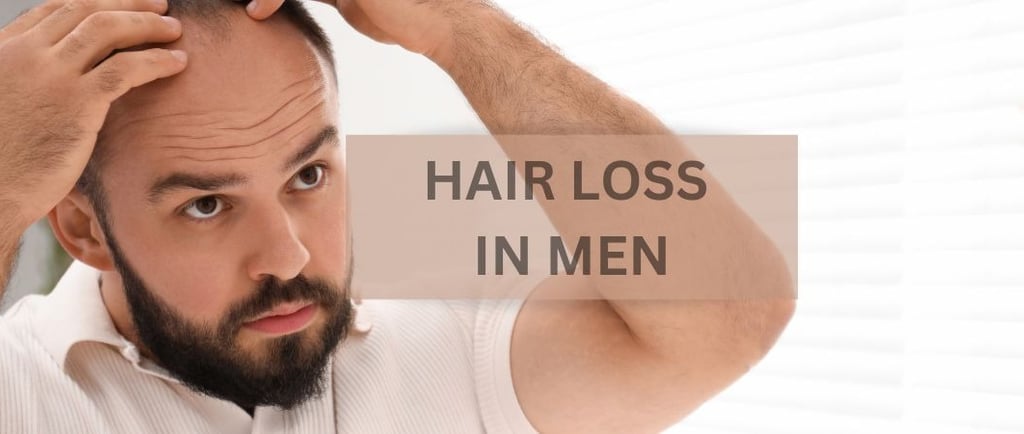
Be honest: when hair starts thinning, it doesn’t just change your hairstyle—it chips away at your confidence. You start avoiding certain angles in photos, adjusting your parting, checking mirrors more than you’d like. Maybe you’ve tried every oil, shampoo, or “hack” you’ve seen online, only to feel stuck.
At Ray & Rio’s Specialty Clinic, Chennai, we meet men every week who share the same worry: “Is this the beginning of lifelong hair loss?” The good news—there’s a calm, medical way forward. Let’s walk through it together.
How Male Hair Loss Usually Starts (and Why It Feels So Unfair)
Hair loss in men often unfolds in patterns:
Sudden, heavy shedding: handfuls in the shower or on the pillow—usually triggered by stress, illness, crash dieting, or a major life event.
Slow and steady thinning: density reduces month by month; hair looks lighter and the scalp shows through more.
Receding hairline: temples creep back; the M-shape becomes sharper.
Crown thinning: a widening “coin” on the vertex that slowly expands.
The slow set of baldness: if untreated, many men see a gradual march of Androgenetic Alopecia—a lifelong tendency toward thinning where the hair miniaturizes (becomes finer and shorter) until areas look bare.
It’s not just genetics. Sleep debt, work stress, nutritional gaps, dandruff/itchy scalp, smoking, and family history can all accelerate or unmask what your genes already planned.
Not All Hair Loss Is the Same: Know Your Type
Understanding the type of hair loss saves you years of trial-and-error.
1) Androgenetic Alopecia (Male Pattern Hair Loss)
The most common cause. Hair miniaturizes under hormonal influence over time, especially at the hairline and crown. Left unattended, it typically progresses for life—which is why an early, steady plan matters.
2) Telogen Effluvium (TE)
Think sudden, heavy shedding 6–12 weeks after a trigger: fever/illness, surgery, crash diets, major stress, travel, sleep disruption. Hair usually regains rhythm when the trigger is identified and addressed—sometimes with supportive in-clinic therapies.
3) Alopecia Areata
Immune-related patches that appear suddenly (coin-shaped). Often stress-linked, sometimes recurrent. Requires medical diagnosis and targeted care to calm the immune response and protect regrowth.
4) Scarring Alopecia (rare, but important)
Inflammatory conditions that destroy follicles permanently if untreated (tight, shiny patches; symptoms can include burning/itch). Needs urgent dermatologist attention—early diagnosis prevents irreversible loss.
Smart Diagnosis: Why We Use Trichoscopy
Trichoscopy is a magnified exam of your scalp and strands. It helps us:
Distinguish miniaturization (pattern loss) from shedding (TE)
Spot inflammation, scale, or mites
Measure hair caliber diversity and density
Map “safe” vs “at-risk” zones before planning any procedure
This precision lets us design a plan that matches your exact pattern, pace, and scalp health—no guesswork.
What Actually Helps: Treatments That Respect Your Biology
We won’t list drug names here. Think of your plan as layers that work together:
Nourish the follicle → Improve microcirculation → Calm inflammation → Support the growth cycle → Protect against DHT-driven miniaturization.
A) Home-Care Foundations (Dermatologist-guided)
Scalp hygiene & anti-inflammatory care: keep dandruff/itch under control to protect follicles.
Targeted leave-ins/tonics: designed to enhance blood flow, deliver nutritive peptides/antioxidants, and support the growth phase.
Lifestyle tuning: consistent sleep, stress management, protein-rich meals, iron/B12/Vit-D sufficiency, hydration, and exercise.
Routine—not roulette: we give you a minimum effective routine and keep it steady.
B) In-Clinic Procedures (Evidence-Led, Low Downtime)
1) Scalp Meso — Our “Hair Rejuvenation System”
Unique to our clinic’s protocol: a multi-step session combining
High-frequency scalp stimulation → boosts microcirculation and scalp vitality
LED light therapy (blue/red) → reduces inflammation, supports cellular repair
Meso cocktail with stem-cell derivatives + nutritive peptides + antioxidants → designed to nourish follicles, support the anagen (growth) phase, and improve hair quality
Good for men with early–moderate thinning, dull hair quality, or post-illness shedding.
2) PRP (Platelet-Rich Plasma)
Prepared from your own blood, PRP concentrates growth factors that signal follicles to work better. Great for reducing shedding and thickening existing hair over weeks to months.
3) GFC (Growth Factor Concentrate)
A refined approach that yields a consistent, high concentration of growth factors. Many men choose GFC when they want a more concentrated option or have plateaued on standard PRP.
4) Exosomes — AnteAGE® MD
Advanced cell-derived vesicles rich in signaling molecules that modulate inflammation, enhance micro-environment repair, and support follicular communication. We use curated protocols (e.g., AnteAGE MD) as an adjunct when biology needs an extra nudge.
5) Hair Transplant (FUE)
When an area has lost follicles (shiny scalp, established recession/crown gap), the solution is redistribution—moving robust follicles from the donor zone (back/sides) to restore a natural hairline and density.
Local anesthesia, day-care procedure
Back to desk work in a few days
Growth starts ~3–4 months; fuller look at 9–12 months
We design angles, direction, and density for believable, age-appropriate results
Aftercare: Simple, Sustainable
First 24–48 hours after in-clinic sessions: keep scalp clean and dry; avoid sauna/steam, heavy workouts, alcohol.
No scratching or rubbing; gentle cleansing as advised.
Sun protection for the scalp if exposed.
Resume prescribed leave-ins as directed (often next day).
Follow your review schedule—tiny tweaks early prevent setbacks later.
What Makes Our PRP / GFC Different
Not all protocols are equal. At Ray & Rio’s we emphasize:
Quality control: standardized preparation steps, activation, and dosing.
Scalp readiness: calming dandruff/irritation first so growth factors can work better.
Mapping & metrics: we track density, caliber, and photos to measure real change.
Layering: pairing PRP/GFC with Hair Rejuvenation System or Exosomes when biology calls for it.
Lifestyle Levers You Can Start Today
Sleep is medicine: target 7–8 hours; fixed sleep/wake windows stabilize hormones.
Protein on your plate: hair is keratin—aim for protein twice daily.
Micronutrient sanity: don’t guess; if loss is new or heavy, check ferritin, B12, vitamin D, thyroid.
Stress hygiene: short daily decompression (walks, breathwork, training).
Quit smoke, curb alcohol binges: both derail scalp circulation and repair.
Gentle haircare: avoid tight caps/helmets for long hours, rough towel-drying, and harsh chemicals.
FAQs Men Ask About Hair Loss (SEO-friendly, straight answers)
1) Is male hair loss permanent?
Pattern loss tends to progress lifelong if unattended. Many men stabilize and thicken hair with a steady, layered plan; areas that are bald may need transplant.
2) How do I know if it’s Androgenetic Alopecia or Telogen Effluvium?
Pace and pattern. TE = sudden shedding after a trigger; pattern loss = gradual miniaturization at hairline/crown. Trichoscopy and a consult clarify it fast.
3) Can lifestyle alone reverse hair loss?
Lifestyle helps slow loss and support treatment. Significant thinning usually needs medical home-care + in-clinic procedures for visible change.
4) What’s the difference between PRP, GFC, and Exosomes?
All support follicles where hair still exists. PRP is your plasma with growth factors; GFC is a more concentrated growth-factor preparation; Exosomes (AnteAGE MD) add advanced signaling for repair. We choose based on stage, budget, biology.
5) When do I need a hair transplant?
If an area is follicle-poor or bald, boosters won’t recreate hair. FUE transplant restores hairline/crown; we often combine with PRP/GFC/Exosomes to protect surrounding hair.
6) How soon will I see results?
Shedding often calms in 6–8 weeks with the right plan
Density/quality improve over 3–6 months
Transplant growth starts 3–4 months, fuller by 9–12 months
Consistency beats intensity.
7) Is it painful? What about downtime?
Clinic sessions are well-tolerated with numbing/cooling; mild tenderness for a day. FUE is local anesthesia day-care; desk work in a few days.
8) Can dandruff cause hair loss?
Yes—scalp inflammation accelerates shedding and blunts procedure results. We treat scalp health first.
9) Will I need treatments forever?
Pattern loss is ongoing, so most men do maintenance (spaced boosters + simple home routine) to hold gains. We keep plans minimal and realistic.
10) Is it safe to get these treatments at any clinic?
Choose a board-certified dermatologist–led clinic with strict single-use consumables and sterilization. Avoid non-medical setups—poor asepsis risks infections and blood-borne diseases. Your results (and safety) depend on standards.
The Takeaway: Calm Plan, Real Results
Hair loss in men isn’t a character flaw—it’s biology. With clear diagnosis (trichoscopy), steady home-care, and precisely chosen procedures—from our Hair Rejuvenation System and PRP/GFC/Exosomes (AnteAGE MD) to FUE hair transplant—you can move from worry to a workable plan.
Ready to talk about your hair?
You know where to find us!!!
Ray & Rio’s Specialty Clinic, Chennai - Egmore & Neelankarai
Dermatologist-led clinic by Dr. Annie Flora | 15+ years helping men protect, thicken, and restore hair
👉 Book a hair loss consult
👉 Prefer WhatsApp? Message us for a quick triage and slot on 9840519139
| Your hair. Your confidence. Our priority.|
Contact
Block A, Plot B1, 12th Cross St, Ranga Reddy Gardens, Saraswathy Nagar North, Neelankarai, Chennai, Tamil Nadu
+91 98405 19139
We are here!!!
Neelankarai
Egmore
No. 14/31, First Street, Sait Colony, Egmore, Chennai - 600008, Tamil Nadu
© 2025 RAY & RIO SPECIALITY CLINIC