Call : +91-9840519139

Magnesium: The Quiet Mineral Your Body Uses All Day (and What Happens When You’re Low)
SKIN CARE TIPS
Dr. Annie Flora (Board Certified Dermatologist)
1/9/20264 min read

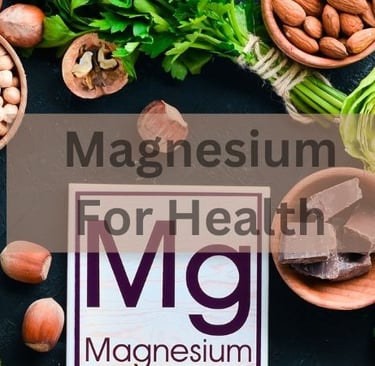
If your days feel like a constant loop of tiredness, muscle cramps, poor sleep, headaches, constipation, or that “wired-but-exhausted” feeling, you’re not imagining it. Sometimes your body isn’t asking for a new supplement trend—it’s asking for a basic mineral that powers hundreds of daily processes:
Magnesium.
It’s not glamorous, but it’s foundational. And because modern life is stressful, fast, and often low on whole foods, magnesium deficiency is more common than most people realize.
Let’s break it down in a simple, useful way—what magnesium does, how deficiency shows up, what to eat, when supplements make sense, and why it matters for urology, skin, and hair health too.
What Magnesium Does in Your Body (In Plain English)
Think of magnesium as a “helper mineral” that keeps your body’s systems running smoothly. It supports:
Energy production (how you feel active and less fatigued)
Nerve function (calm, focus, mood balance)
Muscle relaxation (less cramps, less tightness)
Sleep quality (helps the body wind down)
Heart rhythm and blood pressure support
Blood sugar regulation
Vitamin D function (magnesium helps your body utilize vitamin D)
So if you’re low, it doesn’t just affect one area—it can show up across multiple “everyday complaints.”
Signs You Might Be Low in Magnesium
Magnesium deficiency can be subtle at first. Common signs include:
Frequent muscle cramps, twitching, eyelid flutter
Poor sleep, restless sleep, waking up tired
Fatigue or low stamina
Stress sensitivity, anxiety-like symptoms, irritability
Headaches/migraines (in some people)
Constipation
Palpitations or feeling “off” (always evaluate medically)
Numbness/tingling (if persistent, needs medical review)
Important note: these symptoms can overlap with thyroid issues, anemia, vitamin D/B12 deficiency, dehydration, and stress-related conditions—so don’t self-diagnose blindly.
What Causes Magnesium Deficiency?
A few common reasons:
1) Diet that’s low in magnesium-rich foods
Highly processed foods are typically poor in magnesium.
2) High stress lifestyle
Stress increases magnesium usage in the body—so chronic stress can “drain the tank.”
3) Excess caffeine / alcohol
Can increase loss through urine and worsen sleep.
4) Digestive issues
Poor absorption (e.g., chronic diarrhea, certain gut conditions).
5) Some medications
Diuretics, certain antacids/PPIs, and others can impact levels (doctor-guided evaluation is best).
Why Magnesium Matters in Urology
This is where it gets interesting.
1) Muscle relaxation and urinary symptoms
Magnesium supports muscle relaxation, so in some individuals it may be relevant to:
Pelvic floor tension patterns
Bladder irritability symptoms (not a cure, but part of a holistic picture)
2) Kidney stone context (supportive role)
Magnesium is often discussed in kidney stone prevention because it can interact with oxalate in the gut and urine. While magnesium alone is not a “stone cure,” optimizing overall nutrition—including magnesium—can be part of a broader kidney stone prevention plan in appropriate patients.
Important: If someone has kidney disease or reduced kidney function, magnesium supplementation can be unsafe without medical guidance.
At Ray & Rio’s, our urology team looks at prevention and recurrence patterns with diet, hydration, and appropriate testing—rather than one-size-fits-all advice.
Magnesium and Skin: Calm, Barrier, and Inflammation
Your skin is a stress-sensitive organ. Magnesium plays a supportive role in:
Barrier repair support (healthy skin function relies on balanced minerals)
Inflammation regulation (systemic inflammation can reflect on skin)
Stress-related flare patterns (stress and poor sleep often worsen acne, eczema tendencies, itching, and dullness)
If your skin tends to “misbehave” when you’re stressed and sleep-deprived, magnesium isn’t a miracle fix—but it may be a missing piece in a more complete lifestyle correction.
Magnesium and Hair: Why It’s Mentioned in Hair Fall Conversations
Hair health depends on:
consistent protein intake
iron/ferritin
vitamin D, B12
thyroid balance
stress + sleep quality
Magnesium influences hair indirectly by supporting:
sleep and stress control (hair shedding can increase with stress and sleep disruption)
energy metabolism (overall cellular function)
inflammation balance
If you’re experiencing hair fall, magnesium is rarely the only factor—but correcting deficiencies can support the body environment needed for healthy growth.
Magnesium-Rich Foods You Can Add Easily (Indian Diet Friendly)
Here are practical foods that fit Indian households:
Daily add-ins
Pumpkin seeds (1–2 tbsp)
Sesame seeds (ellu) / til laddoo (in moderation)
Groundnuts (peanuts) / peanut chutney
Almonds, cashews (handful)
Banana (moderate; good when paired with protein)
Meals you already eat (upgrade them)
Spinach (palak), amaranth greens, moringa leaves
Legumes: rajma, chana, moong, masoor
Millets: ragi, bajra, jowar
Oats, whole grains
Dark chocolate (small portion, if you enjoy it)
Simple “Magnesium plate” idea
Breakfast: oats + nuts/seeds
Lunch: dal + greens + millet/whole grain
Snack: roasted chana/peanuts
Dinner: vegetable + protein + greens
Should You Take Magnesium Supplements?
Sometimes yes—but this should be personalized.
Supplements may be considered when:
diet intake is poor or symptoms suggest deficiency
sleep is poor despite basic improvements
cramps are frequent
labs and clinical history support it
But be cautious if:
you have kidney disease, reduced kidney function, or are on certain meds
you’re pregnant/breastfeeding (needs doctor advice)
you already take multiple supplements (risk of excess)
Also: magnesium blood levels can look “normal” even when body stores are low, so symptoms + medical context matter.
When to See a Doctor (Instead of Self-Treating)
Reach out if you have:
persistent fatigue, cramps, palpitations
repeated hair fall with thinning
recurrent urinary symptoms or kidney stone history
skin flare-ups linked to stress and sleep
constipation that’s chronic
At Ray & Rio’s, we approach this sensibly—checking the basics, fixing lifestyle gaps, and guiding supplementation only when appropriate.
The Gentle Takeaway
Magnesium is one of those “quiet heroes” your body uses every day—for energy, sleep, muscle relaxation, mood, digestion, and even the systems that influence skin, hair, and urinary health.
If you’ve been running on stress and shortcuts, this could be your sign to rebuild from the basics—calmly, consistently, and intelligently.
CTA: Stay Connected — and Reach Out When You Need Us
If you’re dealing with hair fall, skin concerns, recurrent urinary issues, kidney stone prevention, fatigue, or sleep problems, you don’t have to piece it all together alone.
📍 Ray & Rio’s Specialty Clinic, Chennai
Dermatology • Aesthetics • Urology care under one roof
👉 Book an appointment for a personalized consultation and long-term wellness guidance.
And stay connected for more practical skin, hair, and health tips from our team.
Contact
Block A, Plot B1, 12th Cross St, Ranga Reddy Gardens, Saraswathy Nagar North, Neelankarai, Chennai, Tamil Nadu
+91 98405 19139
We are here!!!
Neelankarai
Egmore
No. 14/31, First Street, Sait Colony, Egmore, Chennai - 600008, Tamil Nadu
© 2025 RAY & RIO SPECIALITY CLINIC